
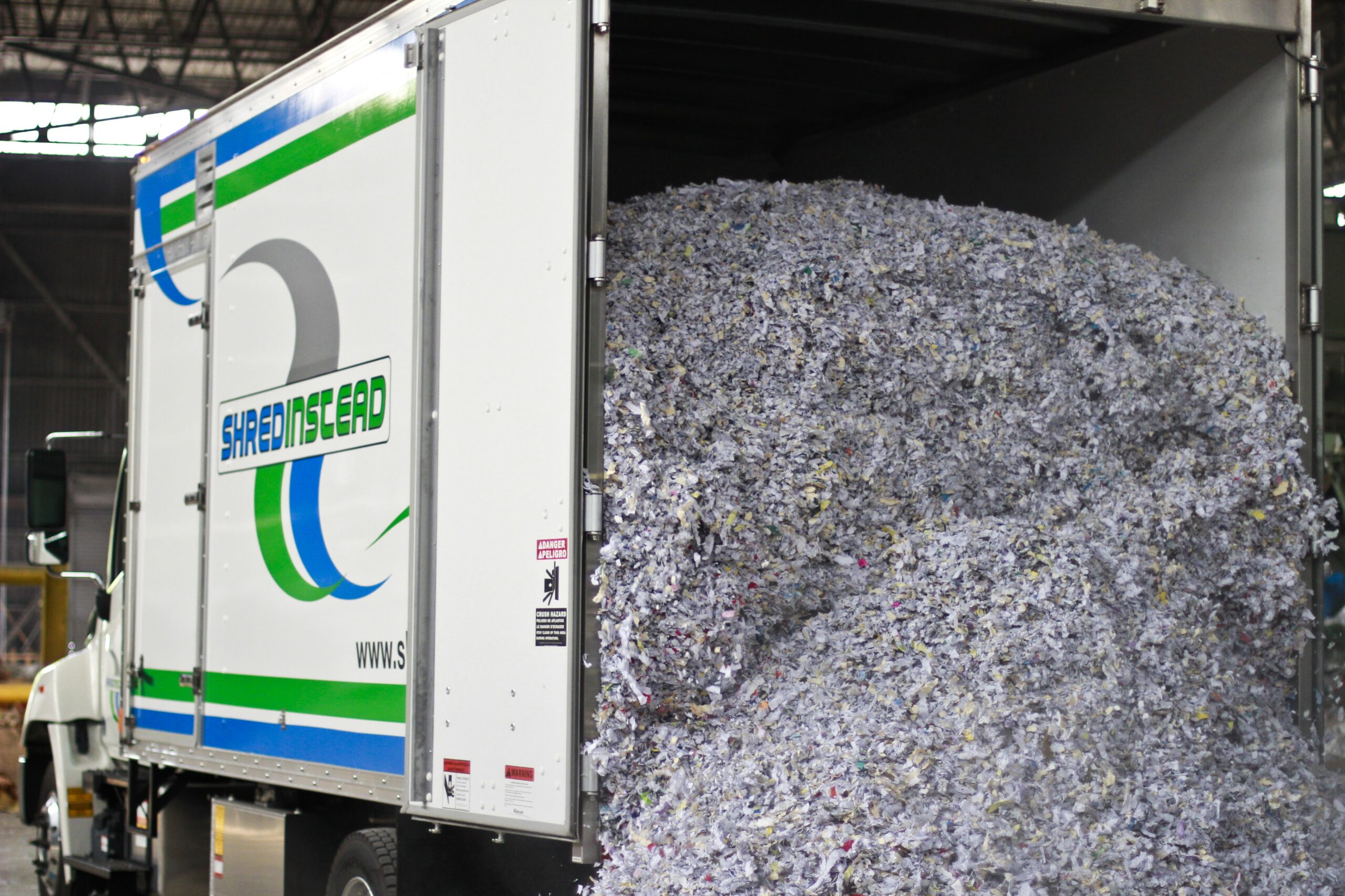
Dropping sensitive documents into a locked shred bin is easy. But what happens next?
At Shred Instead, we believe secure destruction should never be a mystery. So, let’s walk through exactly what happens to your documents—from the moment they leave your hands to their final transformation into recycled pulp.
Step 1: Secure, Hands-Free On-Site Shredding
First, once documents are placed into a Shred Instead container, they remain locked and inaccessible until service day.
Then, trained Shred Instead professionals collect the material and immediately shred it on-site using a fully automated, hands-free cross-cut shredding system. This process ensures no documents leave your facility intact.
As a result, the shredded paper meets or exceeds government and commercial security standards, including HIPAA, GLBA, HITECH, and NSA guidelines. At no point does human handling compromise the material.
Step 2: Secure Transport & Final Destruction Through Pulping
Next, after the initial shredding, the material is mechanically unloaded indoors and combined with other shredded paper. We then compress it into large, sealed bales.
Immediately afterward, these bales are loaded into locked transport vehicles and delivered directly to U.S.-based paper mills. Throughout this process, we maintain a fully auditable chain of custody, from pickup to delivery confirmation.
Once at the mill, the shredded paper enters a hydrapulper, where water and mechanical action reduce it into a wet fiber mash. At this stage, reconstruction becomes physically impossible.
Why Pulping Is the Final Security Step
Unlike basic shredding alone, pulping provides irreversible destruction. The shredded paper mixes with tons of other material, becomes de-inked, cooked, and fully integrated into the recycling process.
Because of this, the final particle size exceeds Top Secret and Classified destruction standards. In short, nothing survives the pulper.
Secure, Compliant, and Sustainable
In addition to security, Shred Instead’s process supports sustainability. All shredded material is recycled domestically into renewable paper products, and no sensitive material is stored for extended periods or shipped overseas.
Most importantly, from curbside pickup to final pulp rendering, your documents remain protected without direct human contact.
The Bottom Line
Ultimately, when you drop documents into a Shred Instead bin, you are choosing a process designed for total security, full compliance, and environmental responsibility. Your information doesn’t just disappear—it’s destroyed beyond recovery and reborn through recycling.
